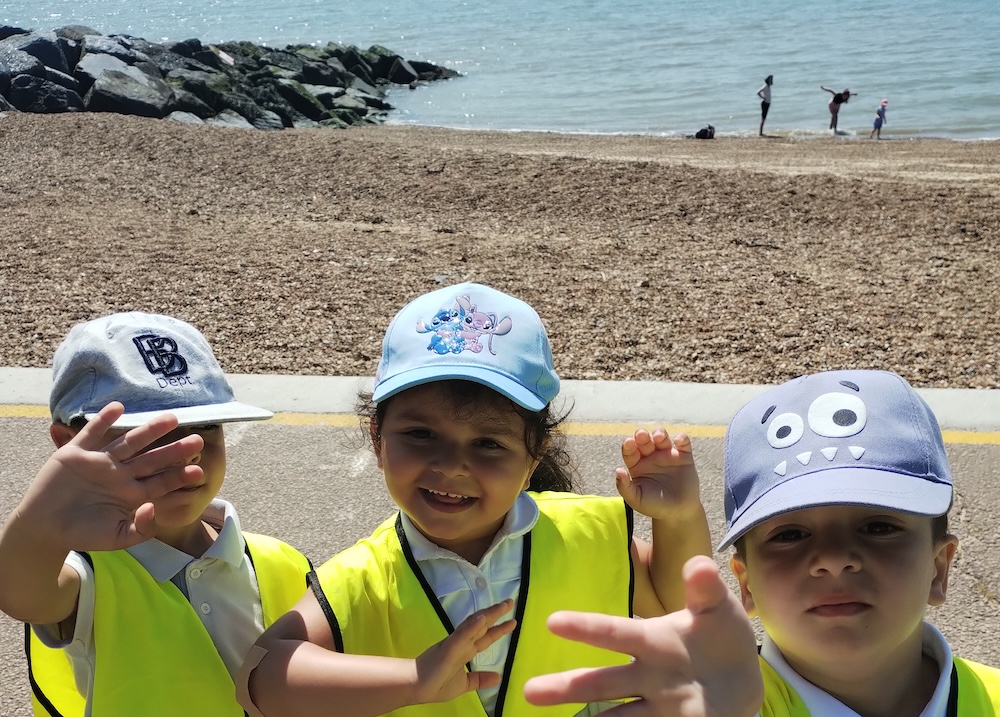
By being exposed to multiple new locations, a beach, a pool, a new restaurant etc. in a short period of time, but with the safety of their primary attachment figures, a child learns that they can cope in novel situations.
It is natural to feel nervous at something new, an anticipatory anxiety of what might be, and travel/holidays are a wonderful opportunity to expose young people to these feelings in small, manageable ways. Because once we do something new, or something that may have worried us, children start to build belief and self confidence in themselves. They start to feel capable and learn that they “can do hard things” and can tolerate uncomfortable, but natural emotions. So, travel not only ignites a child’s sense of adventure and imagination, it can also lead to an ability to approach change with greater adaptability and flexibility.
Research shows travel broadens the mind by improving cognitive abilities, fostering social and emotional growth, and enhancing creativity in children. Travel encourages problem-solving skills by exposing children to new environments, boosts curiosity through different cultures and languages, and builds resilience as they navigate unfamiliar situations.
“learning is the process whereby knowledge is created through the transformation of experience” (Kolb, 1984, p. 38).
Cognitive benefits
- Boosts problem-solving skills: Navigating new places and situations helps children develop critical thinking and problem-solving skills through active, real-world engagement.
- Enhances cognitive health: Exposure to new and complex environments helps the brain form new connections, keeping it more active and alert.
- Improves language skills: Encountering different languages and dialects can improve linguistic abilities and communication confidence.
- Stimulates motivation for learning: Travel puts learning into context, which can increase a child’s motivation and ambition to learn and explore further.
Social and emotional growth
- Fosters empathy and open-mindedness: Experiencing diverse cultures and people helps children appreciate different perspectives and become more empathetic and tolerant.
- Increases independence: Activities like traveling to school on their own or being in a new environment can improve a child’s sense of independence and self-reliance.
- Builds resilience: Navigating unfamiliar environments and unexpected situations helps children become more resilient and adaptable.
- Encourages curiosity: New sights, sounds, and experiences ignite curiosity, encouraging children to observe, ask questions, and absorb new knowledge.
How to encourage travel
- Start local: Introduce children to travel through local trips like day trips to new parks or neighbourhoods, or encourage them to walk or bike to school independently.
- Encourage camps: Summer camps and school field trips are great ways to slowly introduce independent travel in a structured way.
- Promote play-based learning: Use travel as a way to encourage play-based learning, which boosts creativity, imagination, literacy, and social skills.
- Make it a habit: Even small, frequent trips or conversations about what was seen and done can have a lasting positive impact.
References:
2000 International Society on Infant Studies.
Dr Samantha Fish, Clinical Psychologist
Article: Why travel should be considered an essential human activity | National Geographic
Tahreena Ward – Principal, Culloden Primary
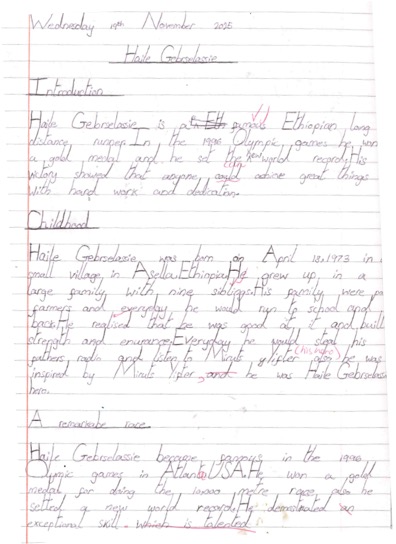
Weekly Writing Outcome
English
This week’s WWO comes from a year 3 pupil at Old Ford Primary Academy. The remit was to write a biography on Haile Gebrselassie. Based on our shared book study of ‘The Fastest Boy In The World.’
We have chosen this piece because it contains the following:
- paragraphs;
- subheadings to organise paragraphs;
- chronological order;
- variety of sentence starters.