
Questioning in the classroom
To be an effective teacher requires many skills, with high-quality questioning being one of the most important.
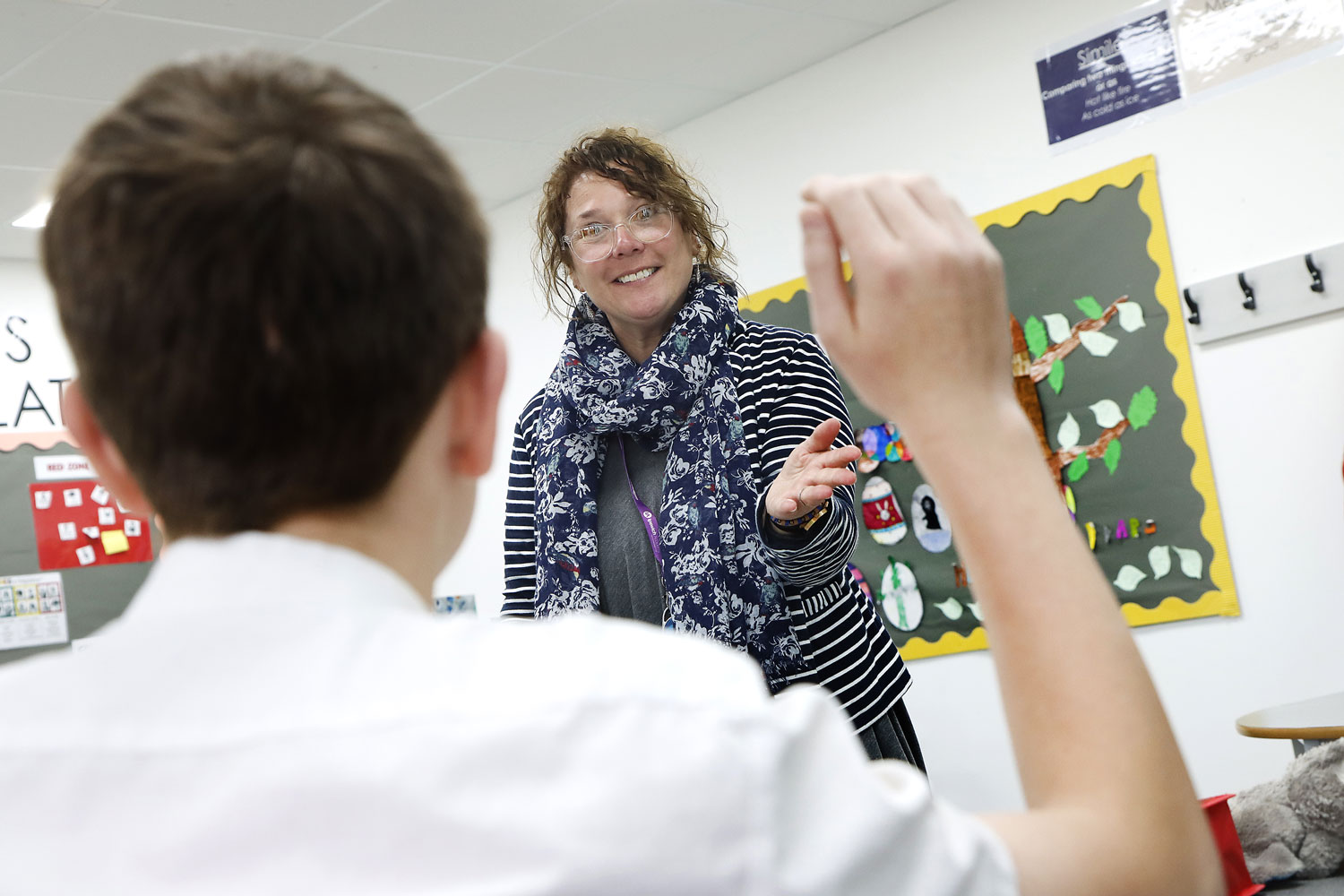
“Questioning is not just a technique, it’s a mindset. It lies at the very heart of formative assessment and plays a central role in improving pupils’ understanding.” – Ana Silva, School Improvement Advisor for Paradigm Trust, who sees again and again that the most effective teachers are the ones who use questioning with confidence, intention and skill.
“Questioning is the key to responsive teaching, the way we can uncover and tackle misconceptions, and drive deeper understanding. If a teacher wants to improve their impact in the classroom, this is the place to start.”
This opinion that effective questioning drives deep learning is strongly supported by education research, including the work of Barak Rosenshine, author of Principles of Instruction, in which he points out that effective questioning isn’t just about getting the right answer, it’s about checking for understanding and engaging all learners.
To be more effective, Paradigm requires teachers not to just ask more questions, but ask better ones. This way they engage a wider range of pupils, are able to challenge assumptions and adapt their instruction in real time, based on their pupils’ responses.
Across the Trust, teachers are encouraged to practice a set of questioning techniques until they become second nature. This then significantly improves the quality of classroom interactions and student outcomes. These techniques include:
Cold Calling Instead of Hands-Up
Using a traditional hands-up approach often favours confident students, and leaves others disengaged. Replacing this with ‘cold calling’ – where the teacher chooses who will respond – ensures broader participation. This strategy is not about putting students on the spot, but about creating a classroom culture where everyone is expected to participate in the learning process.
Implementing a ‘No Opt-Out’ Culture
When students respond to a question with “I don’t know,” this can often lead to them being excused from contributing any further. This scenario isn’t accepted at Paradigm Trust. Instead, teachers employ a more effective approach, moving to seek support or the answer from another student, then returning to the original student to revisit the question. This technique builds persistence, confidence and accountability, as students quickly learn that ‘I don’t know’ is the start of learning, rather than the end.
Checking for Understanding
Assuming the material has been understood by the pupils without checking this is actually the case can lead to gaps in knowledge. This is why Paradigm teachers are encouraged to ask multiple pupils to explain what they’ve just been taught. Hearing several perspectives helps deepen learning amongst the class, and also gives the teacher immediate feedback on how effective their teaching has been.
Probing for Deeper Thinking
Rather than accepting a single, surface-level response, effective questioning involves digging further. Asking follow up questions such as “Why do you think that?”, “Can you give an example?” or “What would happen if…?” means students need to engage in more complex reasoning and critical thought. It also lets teachers spot misconceptions and correct them before they take root.
‘Say It Again, But Better!’
When students give answers that are vague or underdeveloped, teachers at Paradigm Trust encourage them to refine their answer. This is one of Ana Silva’s favourite strategies: “This simple tweak builds oracy, encourages higher quality responses and reinforces the idea that thinking is a process of continual refinement.”
Structured Talk Through ‘Think, Pair, Share’
Using the ‘think, pair, share’ strategy reaps huge benefits, as it allows students to consider a question individually first, then discuss it with a peer before sharing with the class. This results in richer responses during the whole class discussion because pupils have had a chance to rehearse their thinking (and has the added benefit of avoiding the awkward silences that happen when no-one wants to volunteer an answer). It is also effective for helping students who may be more reserved in whole-class settings express their ideas, as they feel more comfortable in a one-to-one situation.
Whole-Class Response Systems
Paradigm teachers are encouraged to use whole-class response techniques (such as mini-whiteboards) as part of their active questioning so they can get an instant snapshot of how much the class has understood. This then means teachers can adjust the lesson if necessary, ensuring that pupils are at the right level of understanding before moving on.
Ultimately, high-quality questioning is one of the most powerful tools available to teachers. It shapes not just how lessons are delivered, but how students think, engage and learn. And when used with purpose and skill, it transforms educational outcomes. This is the kind of teaching that Paradigm Trust strives for.